Published Mar 11, 2026 · Updated Oct 5, 2026
by Markus Rummel. Respiration frequency (RF) is one of the more underused metrics in endurance training. Power, pace and heart rate usually dominate the conversation, but breathing rate adds something different. It responds quickly to changing workload, tracks perceived exertion well, and sits close to the physiology around ventilatory thresholds [1].
That makes RF useful well beyond curiosity. It can help put threshold estimates into context, and it may also help quantify durability. If pace or power stay steady while breathing rate, heart rate and DFA alpha 1 drift, that tells us something important is changing internally even before performance visibly falls apart [6, 7].
At AI Endurance, we use RF in two main ways. First, it helps us sanity-check HRV-based threshold detection, as covered in our earlier post on respiration frequency and HRV thresholds. Second, we are working on RF drift, together with heart rate and DFA alpha 1, as a practical durability marker for prolonged exercise.
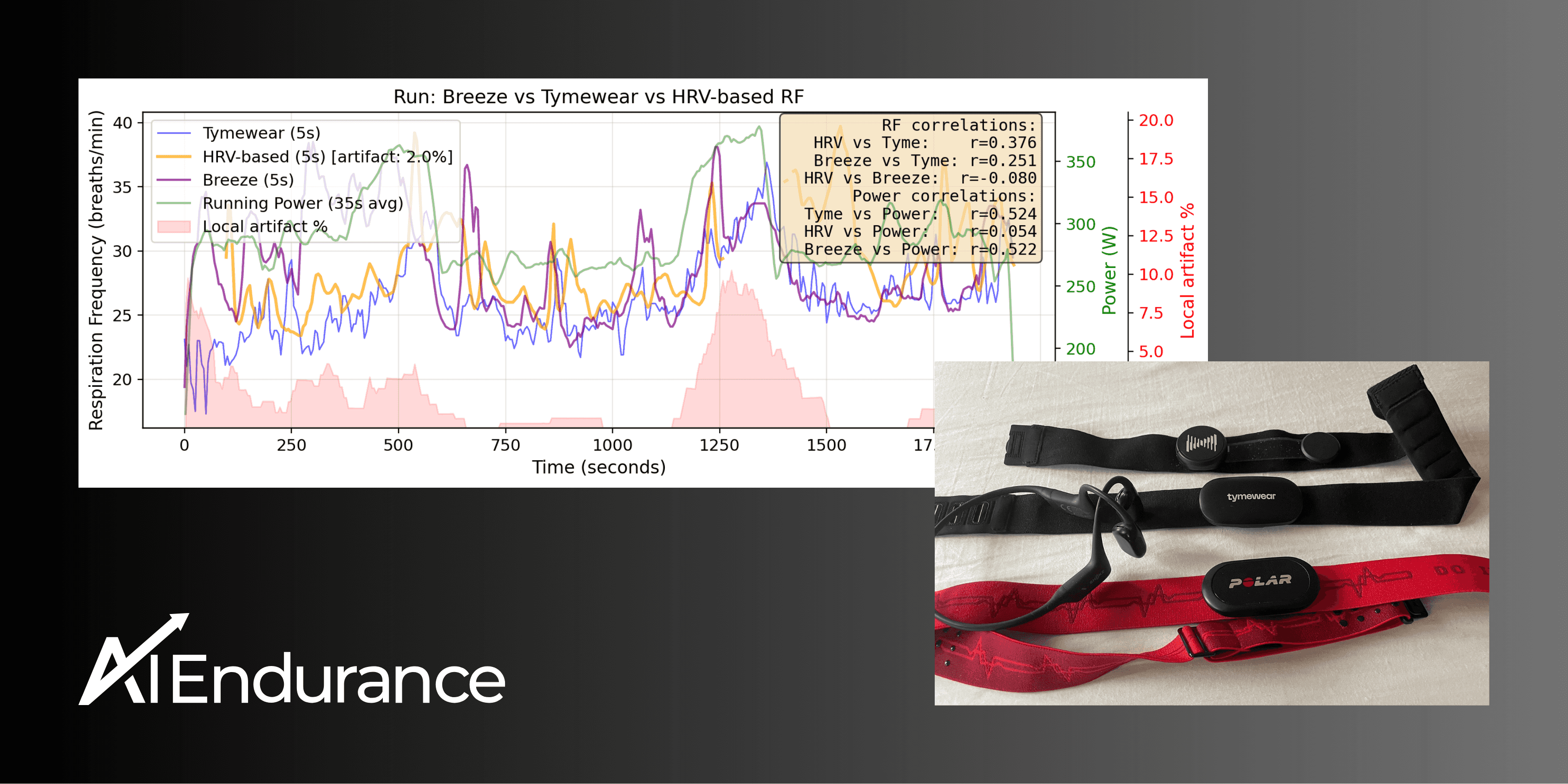
This post compares three ways to measure RF in the field: direct measurement with Tymewear, indirect estimation from HRV, and BreezeLabs as a possible future convenience option for running.
The cleanest option is direct measurement. If you use Tymewear together with the Tymewear Garmin Connect IQ app, AI Endurance can now read Tymewear RF values directly from the FIT file. That is the straightforward solution if you want the best available field measurement.
The downside is cost, and for many athletes it also competes for the same chest real estate as a Polar H10 or Suunto strap.
The more affordable option that still lets you benefit from all in-activity HRV related features such as threshold and readiness determination, is indirect measurement from HRV. This works because breathing leaves a clear signature in the RR interval time series through respiratory sinus arrhythmia [2]. During inhalation and exhalation, beat to beat timing changes in a structured way, and with the right signal processing that structure can be turned into an RF estimate [3, 4, 5].
The big advantage is obvious. If you already wear a good HRM chest strap for HRV-based threshold work, readiness or DFA alpha 1, you already have the raw signal needed for RF.
The limitation is the following: At higher intensity, parasympathetic influence drops, the respiratory signature in HRV becomes smaller, and the signal gets more sensitive to noise. On top of that, strap movement, missed beats, poor skin contact and other artifacts can all distort the estimate. So HRV-based RF is not magic. It is a practical and often very useful estimate, but it is not equally reliable in every situation.
BreezeLabs is a different kind of indirect approach: RF is estimated from the breathing sounds you make during exercise, recorded via microphones on commonly available headphones such as Shokz and Redmi models. BreezeLabs' ML algorithm takes the full sound sequence recorded during a run and estimates the RF during the activity.
At the moment RF data is available as csv to download from the BreezeLabs app after your activity. The attraction is that many athletes already run with headphones, so the barrier to entry is low.
The tradeoff is that the measurement environment matters much more. Wind, traffic noise, conversation and running mechanics can all interfere, and at the moment it is a running-only story rather than a universal solution.
BreezeLabs is still very new, both as an application (currently Android app only, iOS app coming soon) and as a concept, so stay tuned for future improvements on their ML algorithm and data integrations.
These figures are single activity examples, not a full validation study. Still, they are useful because they show the practical behavior of each method under realistic conditions rather than in a perfectly controlled lab setup.
A note on correlations: even for a perfect RF measurement, we do not expect perfect correlation between power and RF, e.g. due to lag in the RF response. Generally we do expect reasonable correlation around ~0.5 between external and internal effort. It is also meaningful to correlate indirect measurements (HRV, BreezeLabs) to direct measurement (Tymewear) to get a feel for the accuracy of the indirect measurements.
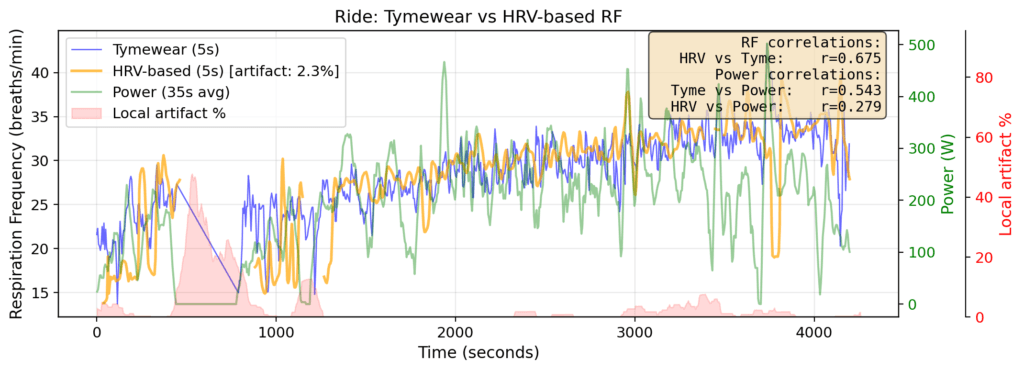
In this cycling session with only 2.3% artifact, the HRV-based method tracks the Tymewear signal reasonably well, with a correlation of r = 0.675. That is not perfect breath-by-breath agreement, but it is already good enough for many of the use cases that matter in practice, such as threshold context, internal load tracking and monitoring how breathing evolves over a long ride.
Around the early part of the ride, where the local artifact percentage rises, the HRV-based signal loses the Tymewear track more noticeably. That is exactly what we would expect. Artifact corruption in the RR intervals directly degrades the RF estimate. When artifacts are low, agreement is substantially better.
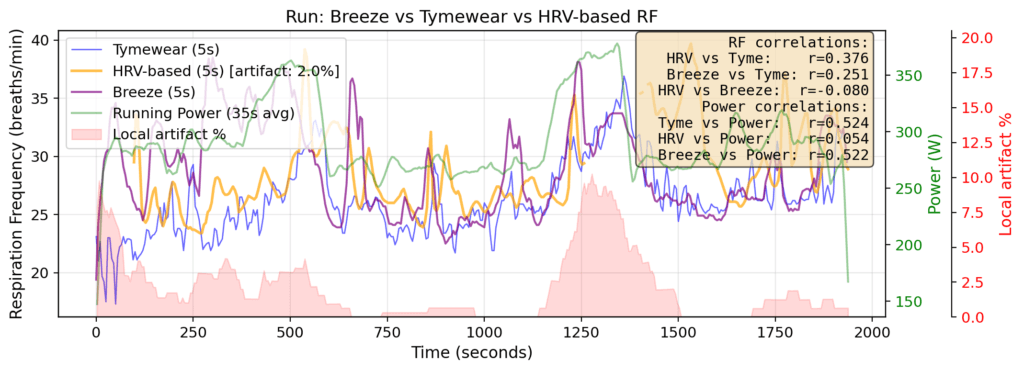
The running comparison includes all three methods. HRV-based RF correlates with Tymewear at r = 0.376, which is lower than cycling. BreezeLabs correlates with Tymewear at r = 0.251. HRV-based and BreezeLabs are essentially unrelated in this sample, manifesting their different data sources.
BreezeLabs seems to be having a bit of a hard time in the first ~500 seconds of the activity but afterwards agreement with Tymewear is very good. HRV-based RF struggles during and around the times of high artifact percentages, underlining the fact that low artifact corruption is crucial for a good HRV-based RF (or any HRV-based quantity) estimate.
The key limitation of HRV-derived RF is that the respiratory signal in the RR intervals weakens as exercise intensity rises. Parasympathetic activity, which drives the beat-to-beat modulation that the algorithm relies on, progressively withdraws with increasing effort. Some mechanical modulation from deep breathing may partially compensate at
higher intensities [11], but the signal-to-noise ratio still degrades.
Lipponen and Tarvainen (2021) validated the Kubios RR-only respiratory rate algorithm during incremental cycling and found that accuracy holds up well through about 42 breaths/min, with error SD between 2 and 6 breaths/min. Above 42 breaths/min the method systematically underestimates by 3 to 6 breaths/min [12]. Since VT1 occurs around 19 breaths/min and VT2 around 32 breaths/min in once cohort of [13], this means the method works through VT2 for most athletes and only fails near peak effort. Both threshold validation and durability monitoring operate well within the reliable range.
If you already have Tymewear data, that is the RF source to prefer. It is the most direct field measurement and, in our view, the current best option when you want to look closely at respiratory behavior during training.
If you do not have Tymewear, HRV-based RF is still very worthwhile. It is affordable, it comes from hardware many athletes already own, and when artifact levels are low it is more than good enough for what we currently use it for in AI Endurance, especially together with DFA alpha 1 and threshold analysis. This is very similar to the conclusion from our earlier post on respiration frequency and HRV thresholds: the metric does not need to be perfect to be useful.
BreezeLabs is promising new convenient approach. If it can make it robust enough and integrated with common data collection flows (e.g. present in FIT files), it could become an easy way to add respiratory information to everyday running.
Our HRV-based RF method is not fixed forever either. We continue to refine it against paired real-world data from sessions where direct RF and chest strap HRV are both available. The goal is to make the production estimate as robust and useful as possible for real training decisions.
The durability angle is one reason this matters beyond threshold detection. Maunder and colleagues made the basic point well: endurance profiling done in a fresh state misses the fact that key physiological landmarks move during prolonged exercise [8]. Recent work has shown that prolonged low-intensity exercise can shift submaximal thresholds and that intra-session changes in DFA alpha 1 are associated with those shifts [6]. Since then, Rothschild and colleagues showed that respiratory-frequency decoupling alongside heart rate decoupling during prolonged cycling is associated with the durability of VT1 and improves prediction of real-time changes in that threshold [9].
In runners, Lloria-Varella and colleagues reported that after a 90-minute submaximal trail run, breathing frequency increased by 19.9% during the post-fatigue locomotion test despite unchanged ventilation [10]. More recent work has also started looking directly at RF and fractal HRV behavior as durability markers [7].
We are still early here, but the direction is promising. A field-based combination of heart rate, DFA alpha 1 and RF drift could become a practical way to monitor when "easy" is no longer really easy and in general durability declines.
Please help us improve the HRV-based RF algorithm: you need to record activities with both Tymewear and a Polar H10 or Suunto HRM, yes - you need to wear two HRMs at the same time. Beyond ensuring that they both fit well around your chest and collect date, there is nothing else for you to do. We will automatically scan new activities each day and look for sessions where both direct RF and HRV-based RF are available in the processed activity data.
If the activity includes both signals and the artifact correction is below 5%, we will automatically assign $1 in credit, to your AI Endurance account. In other words, if you wear the sensors and upload the activity, the rest is handled on our side.
The goal is simple: build a larger paired dataset across runs and rides so we can keep improving the HRV-based algorithm under real-world conditions.
Apple Watch has been a popular choice in running and triathlon. You can now track and execute your AI Endurance custom running, cycling and swimming workouts on your Apple Watch.
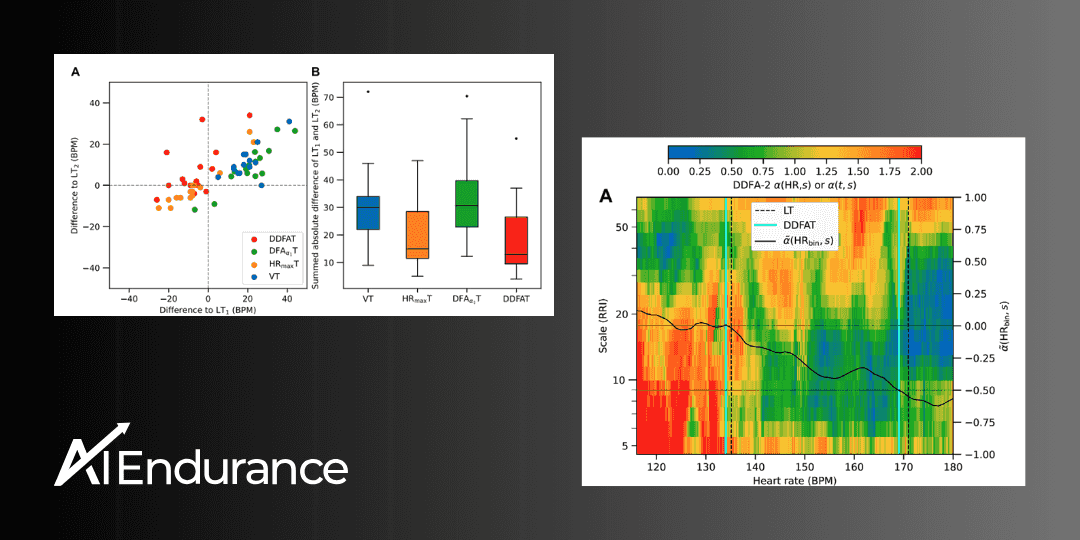
by Markus Rummel. DDFA (Dynamical Detrended Fluctuation Analysis) is a new method to analyze the changes in your HRV data during exercise. It is an evolution of the DFA analysis based on the research in [1, 2] used by AI Endurance.
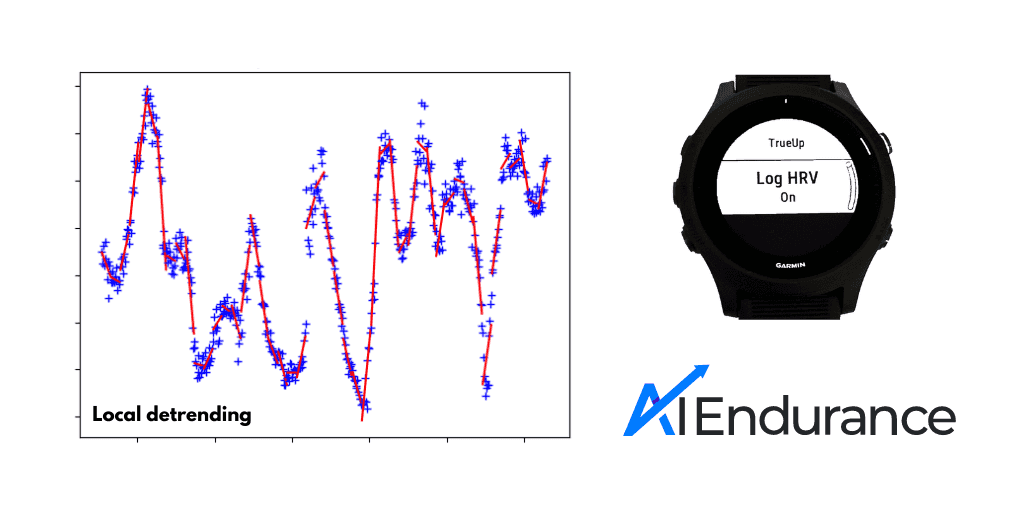
DFA alpha 1 lets you estimate your aerobic and anaerobic thresholds from heart rate variability, with no lab test and no dedicated test workout. A chest-strap HRV monitor like the Polar H10 is all you need for heart-rate thresholds; add power or pace data and you get corresponding thresholds in watts or pace units too. Here is how it works and how accurate it is.
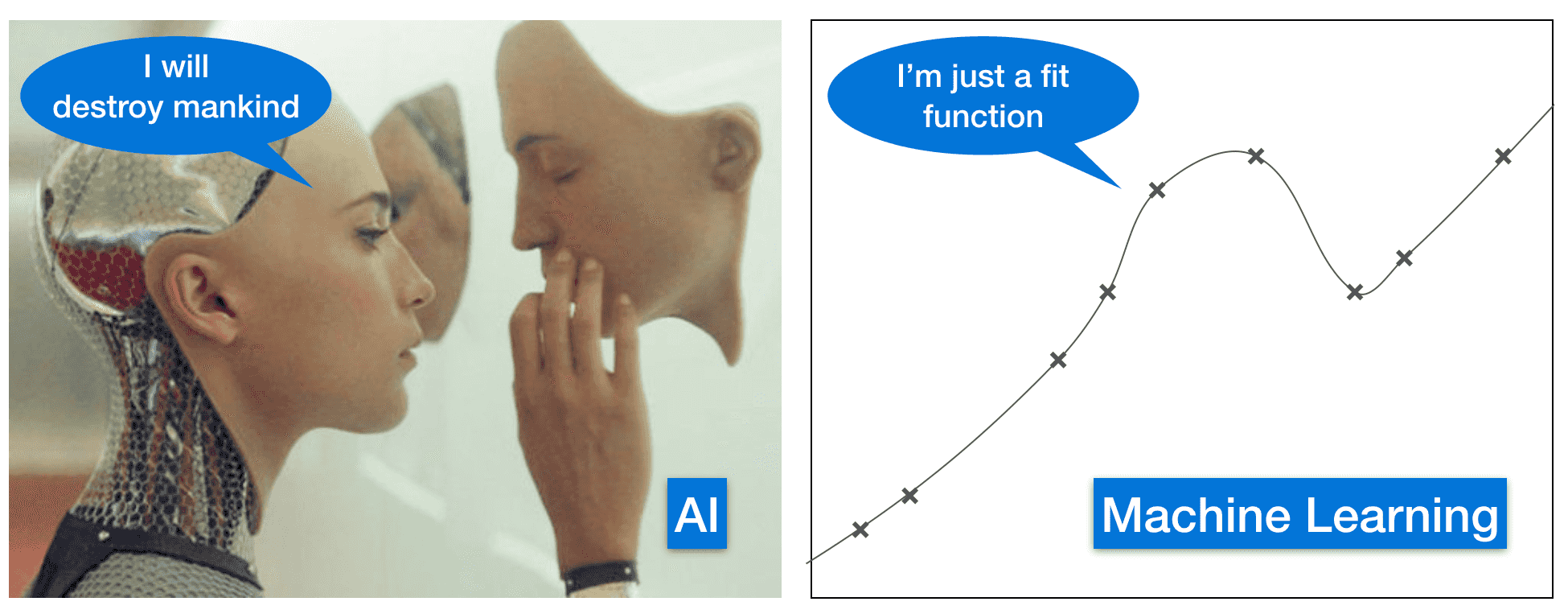
AI has great potential to help us as endurance athletes improve our training. In this post we will discuss how AI endurance training works.

